
Integrated assurance is not a product feature. It is an operating philosophy.
The phrase “supply chain integrity” has become a standard fixture in organisational policy documents and donor compliance frameworks. It appears in procurement guidelines, ESG reports and risk registers across the humanitarian and development sector. What it rarely provides is a credible description of how it is actually achieved when the supply chain runs through a conflict zone, a border region with no functioning regulatory authority, or a market where informal actors dominate, and paper trails are unreliable by design.
Closing that gap between policy language and operational reality is the defining challenge for any organization serious about accountability in fragile environments.
The limits of desk-based due diligence
Most due diligence in high-risk environments still begins and ends at a desk. Sanctions lists are checked. Adverse media searches are run. Corporate registration documents are reviewed. These are necessary steps, but they are not sufficient. They tell you what is on the record. In fragile states, the information that matters most is often shared quietly by people who understand the local context.
A vendor that passes every standard screening may be a front for a network with direct links to armed groups. A partner organisation with clean financials may be channelling funds through informal brokers who operate outside any oversight framework. A supplier that appears to employ legitimate labour may be sourcing through subcontractors three tiers down the chain where no one has looked. A client informed us that, in one review, the formal supplier file looked complete until local checks revealed that the actual delivery route was being controlled by an undisclosed intermediary. These risks are not theoretical. They are routine features of operating in environments where opacity is structural and verification requires physical presence.
What an integrated service model actually delivers
The alternative is an approach that combines financial audit capability with field-based intelligence gathering, supply chain mapping and continuous monitoring. Each function reinforces the others. An audit without field intelligence is working with incomplete information. Intelligence without audit rigour lacks the evidentiary standard that donors and regulators require. Supply chain mapping without ongoing monitoring captures a point in time rather than the dynamic reality of how goods and funds actually move.
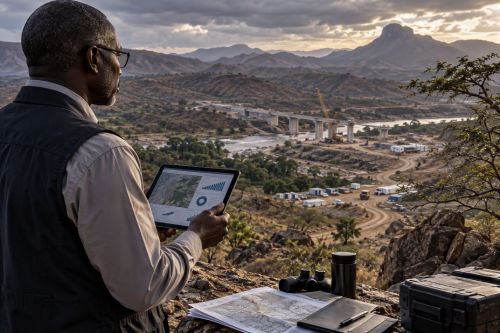
Effective supply chain integrity work in fragile states involves mapping supplier and subcontractor networks down to informal actors, conducting on-site verification where standard visits are not feasible, screening for sanctions exposure and conflict actor links, assessing labour practices against international standards and building a monitoring cadence that responds to real-world events rather than fixed reporting calendars.
The intelligence layer that changes the picture
The most significant differentiator in high-risk assurance work is first-person information. Local source networks, developed through years of relationship-building in specific geographies, provide access to information that no database or desk review can replicate. We often find that a single conversation with the right local source can explain inconsistencies that weeks of document review could not resolve. Reputation assessments, political exposure mapping, conflict affiliation checks and community-level knowledge of how organisations actually operate are what separate assurance that is genuinely protective from assurance that is merely compliant.
For organisations operating in Somalia, South Sudan, Ethiopia, Sudan, the DRC, Nigeria and across Central and Western Africa, the questions that matter most are rarely answered by documents alone. They are answered by people with the right access, the right relationships and the right methodology for gathering and validating what those relationships produce.
Speed and deployment capacity
One dimension of supply chain integrity work that rarely receives sufficient attention is deployment speed. In high-risk environments, situations develop quickly. A partner organisation may come under security pressure. A supplier network may shift overnight in response to conflict dynamics. The value of an advisory firm that can mobilise a field team within days rather than weeks is not a marginal operational benefit. It is the difference between getting ahead of a problem and managing its consequences.
The third and final article in this series addresses how organisations can build an accountability infrastructure that is proportionate to the environments they operate in and what the selection criteria for a credible advisory partner should look like.