
What organisations operating in fragile states should demand from their advisory and assurance partners
The organisations that suffer the most damaging accountability failures in fragile-state operations are rarely those that lacked policies. More often, they had policies written for environments that bear little resemblance to the ones they were operating in. A fraud prevention framework developed for a stable country context does not protect a programme running across conflict-affected regions in the DRC. A supply chain compliance protocol that assumes regulatory infrastructure will function does not hold up in South Sudan.
Getting this right requires a clear-eyed assessment of what accountability infrastructure should look like when the operating environment is genuinely high-risk and what it means to find an advisory partner capable of supporting it in practice.
Proportionality: The principle most organizations get wrong
Accountability frameworks should be proportionate to risk, not proportionate to what is convenient to implement. In practice, many organisations default to the latter. They apply the same due diligence processes across very different risk profiles and then wonder why the results fail to surface the problems that matter.
In fragile-state contexts, proportionality means investing in enhanced intelligence for high-risk counterparties, building a monitoring cadence that responds to real-world events rather than annual review cycles and maintaining ongoing watchlist and sanctions screening as a live capability rather than a point-in-time check. It means treating the verification of beneficiary outcomes with the same seriousness as financial compliance. It also means having a clear escalation framework for sensitive findings, including cases involving child labour, conflict-actor links or potential sanctions breaches, before a situation requires one.
What to look for in an advisory partner
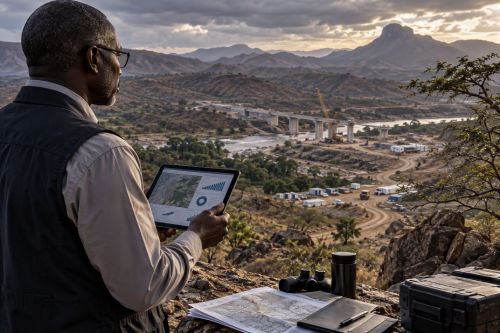
The selection of an advisory or assurance partner for fragile-state operations is a decision that deserves significantly more rigour than it typically receives. Price and brand recognition are poor proxies for capability in this context. A client recently put it simply: the question is not whether the firm has a global name, but whether it can find out what is happening where the programme is actually being delivered.
The questions that matter are practical ones. Does the firm have genuine field presence in the specific geographies where you operate, or does it rely on remote analysis and periodic visits? Does it maintain trusted local networks that produce original intelligence, or does it repackage open-source information that is available to anyone? Can it deploy quickly when circumstances change, or does its model depend on lengthy mobilisation cycles? Does it offer integrated capability across audit, investigation and intelligence, or does it refer out to other providers when the scope moves beyond financial assurance?
The answers to these questions determine whether an advisory relationship produces accountability that is genuinely protective or accountability that is primarily documentary.
The reputational and legal stakes are rising
The case for investing in this kind of capability has strengthened considerably in recent years. Donor scrutiny has intensified. Regulatory frameworks have expanded. ESG commitments have moved from voluntary aspirations to enforceable standards with real consequences for non-compliance. The organisations building robust, field-grounded accountability infrastructure now are positioning themselves ahead of requirements that will become more stringent, not less.
There is also a straightforward reputational argument. In an era where a single diversion incident, sanctions exposure or supply chain scandal can define an organisation’s public standing for years, the cost of inadequate assurance in high-risk environments is not a budget line. It is a strategic liability.
The path forward
Effective accountability in fragile states is not achieved through better paperwork. It is achieved through deeper field intelligence, more rigorous supply chain visibility, faster response to emerging risks and advisory partnerships that are built around the realities of the environments in question rather than the conventions of standard consulting practice.
The gap between what organisations report and what is actually happening on the ground in fragile-state operations is closeable. We have seen that gap narrow when teams combine disciplined assurance work with people who understand the local terrain. But closing it requires tools, partners and a level of investment in accountability infrastructure that matches the genuine complexity of the operating environment.
If your organisation is operating in high-risk or hard-to-access environments across Africa and wants to discuss what a credible, field-grounded approach to risk advisory, supply chain integrity and intelligence-led due diligence looks like in practice, we would welcome the conversation. Get in touch to speak with one of our senior advisors.